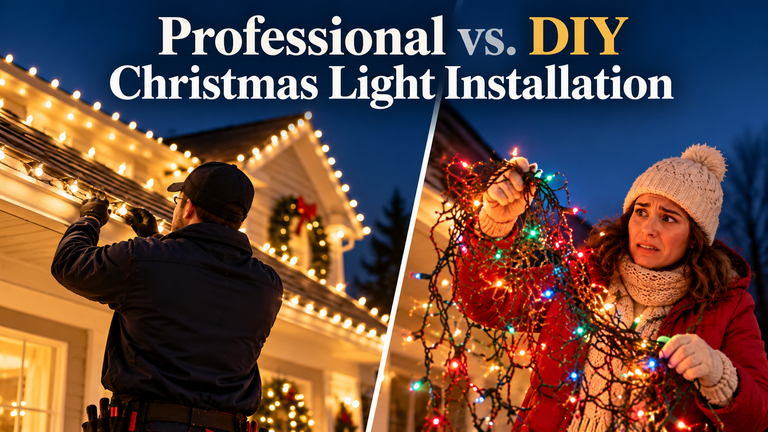
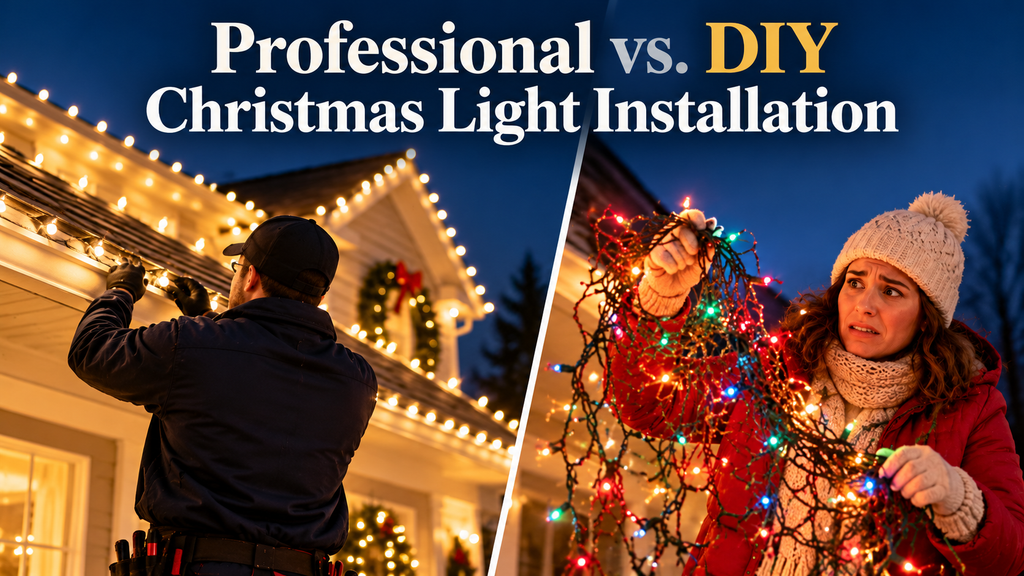
DIY Christmas light installation costs less upfront, but it usually takes a full weekend, means working on a ladder in cold, wet weather, and can damage gutters or fascia if clips are used incorrectly. Professional installation costs more, but it is done in a few hours, includes design, maintenance and takedown, and the installer carries the ladder risk. For single-storey homes with simple rooflines, DIY can make sense. For two-storey homes, steep roofs or anyone short on time, hiring a pro is usually the better value.
Every November, homeowners across Surrey and the Lower Mainland face the same question: drag the ladder out and spend the weekend untangling lights, or call a professional and skip the hassle?
There is no single right answer. It depends on your home, your budget, your schedule and how comfortable you are working at height. This guide compares professional vs. DIY Christmas light installation across the three things that matter most: cost, safety and time. By the end, you will know which option fits your home.
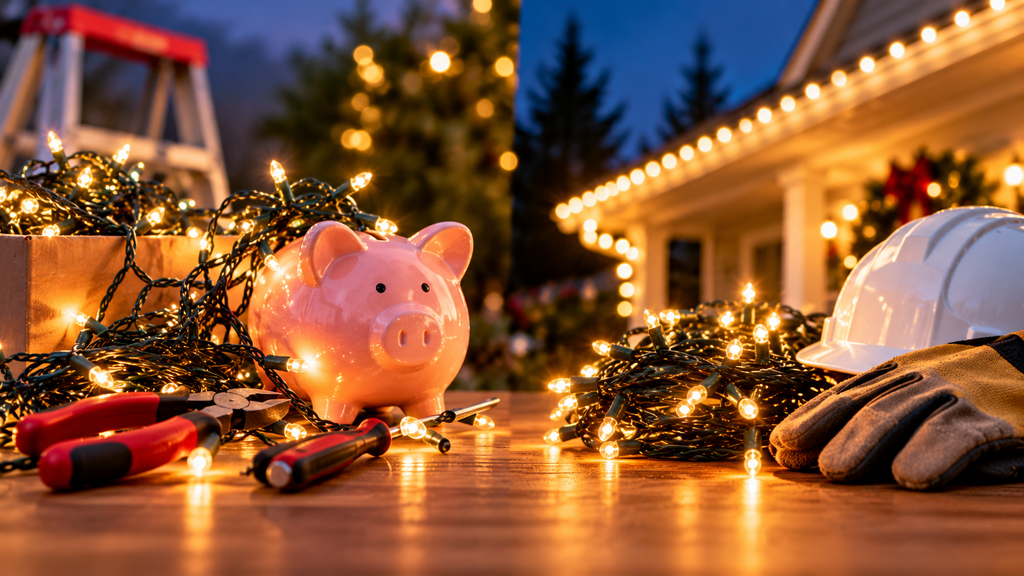
Professional vs. DIY at a Glance
| Factor | DIY Installation | Professional Installation |
| Upfront cost | Lower – you pay for lights, clips, cords and timer | Higher – you pay for labour, design and often the lights |
| Long-term cost | Replacement bulbs, strands and gear every few years | Usually bundled into the seasonal price |
| Time | 1–2 days to install, plus another day to take down | A few hours, with takedown included |
| Safety risk | You are on the ladder, often in rain or wind | Trained, insured crew carries the risk |
| Roofline damage risk | Higher if nails, staples or wrong clips are used | Low – proper clips for gutters and fascia |
| Design | Whatever you can manage | Planned layout, even spacing, clean lines |
| Maintenance | You fix outages yourself | Service calls during the season |
| Storage | Boxes of lights in your garage | Often handled by the installer |
Cost: Is DIY Really Cheaper?
At first glance, DIY wins on price. But the true cost is more than a few boxes of lights.
What DIY Actually Costs
A proper DIY setup usually includes:
- Lights: LED C9 or C7 strands for the roofline, plus mini lights for trees and shrubs. Quality commercial-grade LEDs cost more than big-box store sets, but they last longer and look better.
- Clips: All-in-one clips that attach to gutters and shingles without damage.
- Extension cords and power: Outdoor-rated cords, splitters and a GFCI-protected outlet.
- Timer or smart plug: So your lights turn on and off automatically.
- Ladder: A sturdy extension ladder rated for your roof height, if you don’t already own one.
Add it up, and a first-year DIY setup for an average home often runs into a few hundred dollars before you have hung a single strand. Cheaper lights also tend to fail sooner in our wet West Coast winters, so you may be replacing strands every season or two.
What Professional Installation Costs
Professional pricing is usually based on the linear footage of your roofline, plus any trees, bushes or extra features. North American cost guides commonly list professional installation at roughly $2.50 to $7 per linear foot, with multi-storey homes and complex rooflines at the higher end. Local pricing varies, so the best way to know your number is a free quote.
A professional quote typically includes:
- Design and layout of your display
- Commercial-grade lights (purchased or leased)
- Installation using proper clips
- Service calls if a section goes out
- Takedown in January
- In many cases, storage until next year
DIY is cheaper in year one if you value your own time at zero. Once you factor in replacement gear, your time and the risk of damage, the gap is much smaller than most people expect.
Need Professional Property Maintenance?
From exterior installations to seasonal property maintenance, A.N.A. Property Maintenance is here to help. Get reliable service and practical solutions for your home or business.
Get a Free Quote →Safety: The Factor Most People Underestimate
Hanging lights looks easy from the ground. On the ladder, it is a different story, especially in the Lower Mainland, where November and December bring rain, wind and slick surfaces.
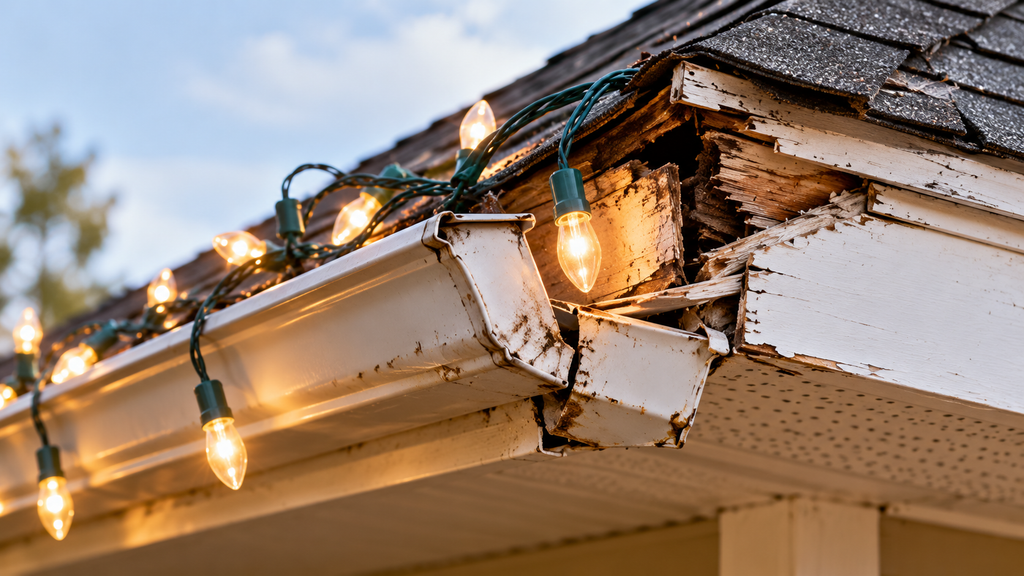
Common DIY Safety Risks
- Ladder falls: Ladders on wet or uneven ground slip easily, and many homeowners overreach instead of moving the ladder.
- Roof slips: Wet or frosty shingles and moss-covered roofs are extremely slippery.
- Electrical hazards: Indoor cords used outside, overloaded outlets and damaged strands can create shock and fire risks.
- Cold-weather fatigue: Working with numb hands in the rain leads to mistakes.
How Professionals Reduce the Risk
A professional crew brings the right ladders and safety equipment and knows how to work on roofs in winter conditions. At A.N.A. Property Maintenance, our crew is covered by WorkSafeBC, so if something goes wrong on the job, you are not left exposed.
If you still plan to DIY, follow these safety basics:
- Always have a second person hold the ladder.
- Never climb a wet, frosty or mossy roof.
- Use only outdoor-rated lights and cords.
- Plug into a GFCI-protected outlet.
- Inspect every strand on the ground before hanging it.
Time: What Your Weekend Is Really Worth
Time is where professional installation pulls clearly ahead.
DIY Timeline
For a typical two-storey Surrey home, DIY often looks like this:
- Planning and shopping: 2–4 hours
- Testing and untangling lights: 1–2 hours
- Installation: 6–12 hours, often split across a weekend because of rain or early sunsets
- Fixing outages during the season: A few hours here and there
- Takedown and storage: 3–5 hours in January
That adds up to roughly 15–25 hours of your time, during one of the busiest months of the year.
Professional Timeline
With a professional crew, most homes are done in a few hours. You book a date, the crew arrives, and your lights are on that evening. Takedown is scheduled for you in January, so there’s nothing to remember.
The Hidden Cost: Damage to Your Gutters and Roofline
This is the part many homeowners don’t think about until spring.
DIY installations often use nails, staples or the wrong clips. These can:
- Puncture or bend gutters, causing leaks and overflow
- Crack shingles or lift them, letting water in
- Scratch or dent fascia, especially painted wood or finished metal
Damaged fascia is a common reason homeowners call us in spring. Small holes let water into wood fascia boards, which can lead to rot over time. If your roofline already shows wear, a metal fascia cover protects the boards underneath and gives you a smooth, durable surface for holiday lights every year.
Professional installers use clips designed to attach to gutters and shingles without drilling or nailing, so your roofline stays intact. If your gutters are already sagging or leaking, it is worth having them checked before the holidays. Our gutter installation service can replace damaged sections so they hold up through winter.
When DIY Makes Sense (and When to Hire a Pro)
DIY Is a Good Fit If:
- You have a single-storey home with a simple roofline
- You own a safe ladder and have a helper
- You enjoy decorating and have the time
- Your display is small, like a porch, railing or a few bushes
Hire a Professional If:
- Your home is two storeys or has a steep roof
- You want a clean, evenly spaced, designer look
- You are short on time during the holidays
- You don’t want to climb in wet or icy conditions
- You want maintenance and takedown handled for you
- You manage a business or commercial property
Frequently Asked Questions
Is it worth paying for professional Christmas light installation?
For most two-storey homes, yes. When you factor in equipment, replacement lights, your time and the safety risk, professional installation often costs less than people expect, and it includes design, maintenance and takedown.
How long does it take to hang Christmas lights yourself?
A typical DIY install takes 6–12 hours, plus time for planning, testing and takedown. Professional crews usually finish an average home in a few hours.
When should I book a Christmas light installer in Surrey?
Book in early to mid-November. Installers’ calendars fill quickly in late November and early December, and the best dates go first.
Will Christmas lights damage my gutters or fascia?
They can if nails, staples or the wrong clips are used. Professional installers use clips that attach without drilling, protecting your gutters, shingles and fascia.
Do professional installers take the lights down?
Most do. At A.N.A. Property Maintenance, takedown in January is part of our service, so you don’t have to climb back up in winter.
Can I use my own lights with a professional installer?
Some installers will hang your existing lights, but commercial-grade lights supplied by the installer usually look better and hold up longer in wet weather. Ask about this when you request a quote.
Final Verdict
If you have a small, single-storey home and enjoy the project, DIY can be a fun tradition. But for most Lower Mainland homes, especially two-storey houses, steep roofs and busy families, professional installation wins on safety, time and the final look, and the cost difference is smaller than it first appears.
For a full look at designs, light types and what to expect from start to finish, read our complete guide to Christmas lights in Surrey. Once the lights are up, don’t forget your driveway and walkways. Our snow removal and salting service keeps them safe for guests all season.
Ready to Skip the Ladder This Year?
A.N.A. Property Maintenance provides professional Christmas light installation for homes and businesses across Surrey, Vancouver, Burnaby, Langley, White Rock, Richmond, Maple Ridge and Mission. We design your display, install it safely, keep it shining all season and take it down in January.
Take a look at our recent projects, then request your free quote or call +1 (672) 755-5156. Dates fill fast in late November, so book early.